Energy Security

For a company or large energy consumer, energy security is no longer just about "avoiding blackouts"; it involves ensuring operational continuity in the face of failures of the National Electric System (SEN), mitigating price volatility in the market, and protecting assets against physical and cyber threats.
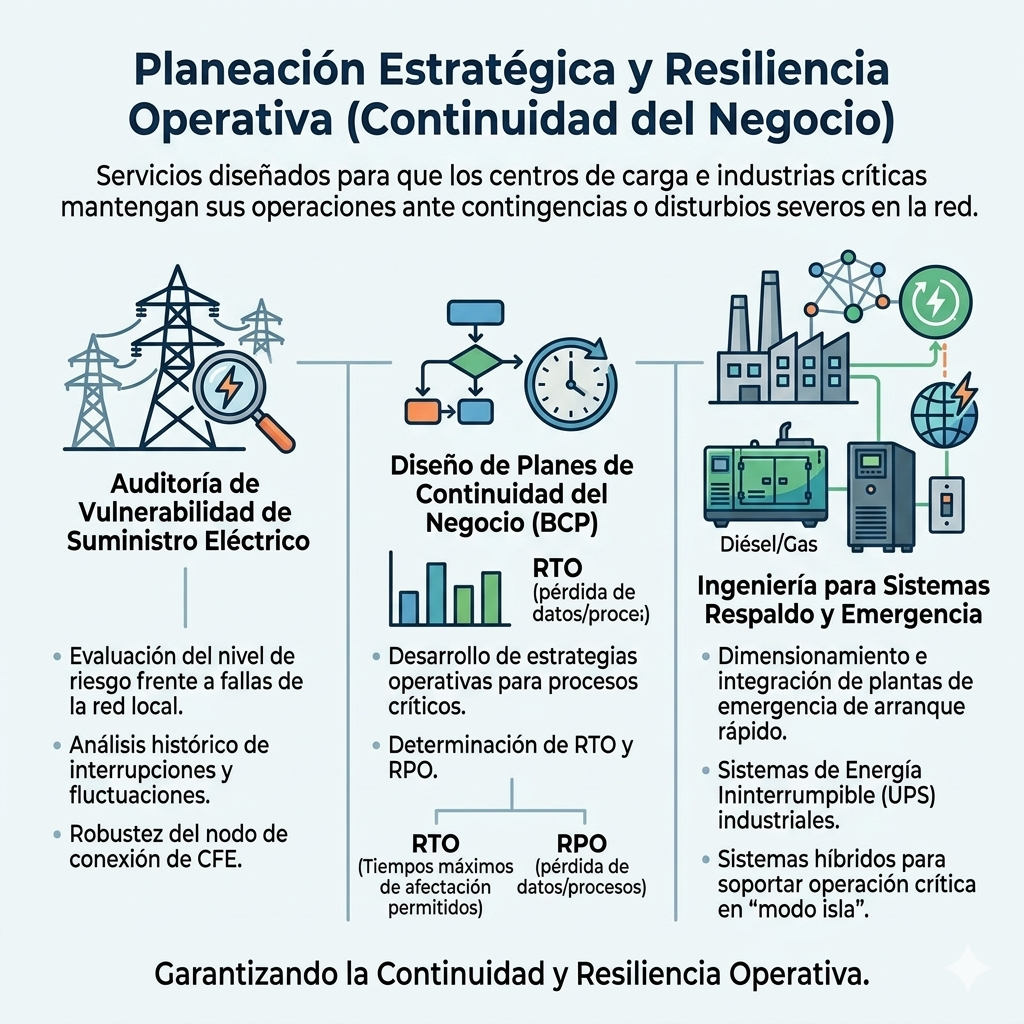
Strategic Planning and Operational Resilience (Business Continuity)

Services designed to enable load centers and critical industries to maintain their operations in the face of contingencies or severe disturbances in the network.

  • Power Supply Vulnerability Audit: Evaluation of the risk level of the load center against failures of the local transmission or distribution network, analyzing the history of interruptions, fluctuations and the robustness of the CFE connection node.
  • Business Continuity Plan (BCP) Design: Development of operational strategies for critical processes that cannot lose energy, determining the maximum allowable impact times (RTO) and data/process loss times (RPO).
  • Engineering for Backup and Emergency Systems: Sizing and integration of fast-start emergency (diesel/gas) plants, industrial Uninterruptible Power Supply (UPS) systems and hybrid systems to support critical operation in "island mode".

Energy Storage and Microgrids (Grid Risk Mitigation)

The integration of cutting-edge technology to decentralize risk and ensure local energy autonomy.
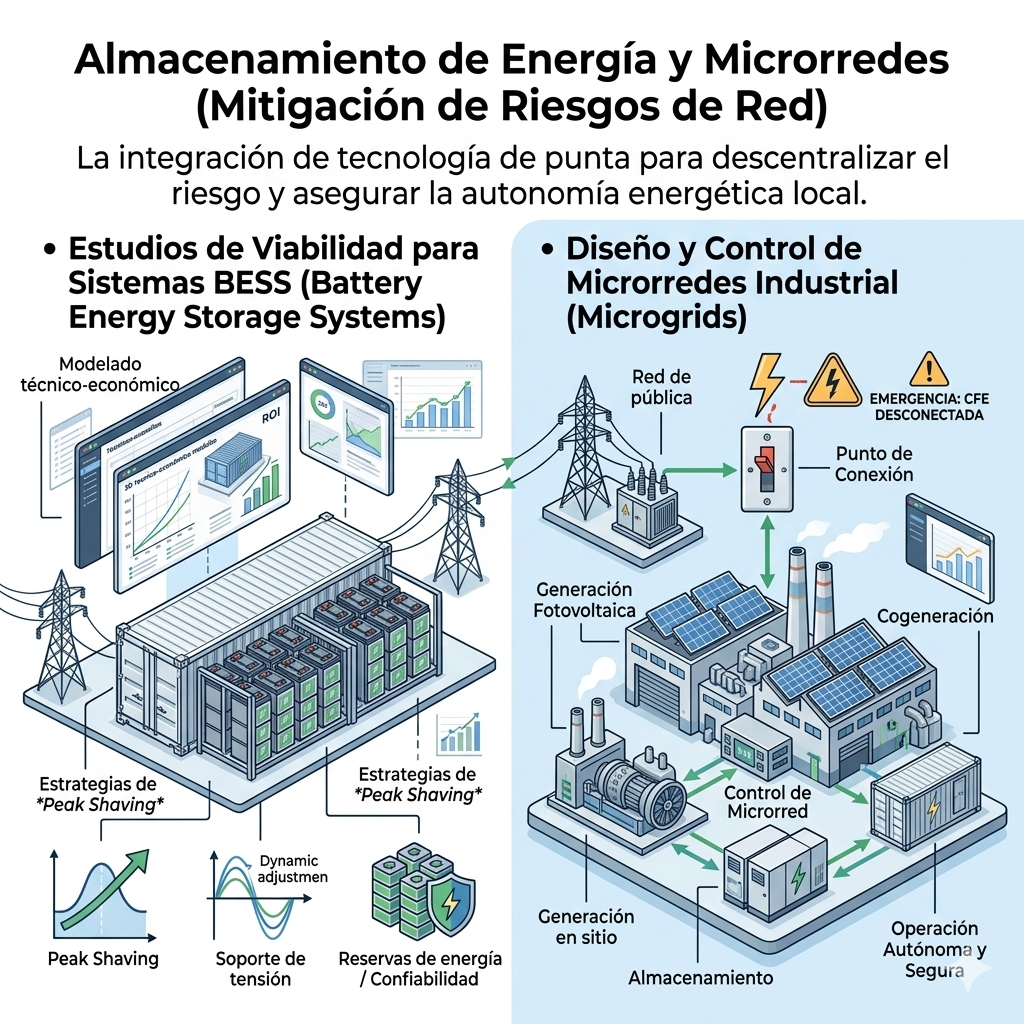
  • Feasibility Studies for BESS (Battery Energy Storage Systems): Technical and economic modeling for the implementation of large-scale battery banks. This includes strategies for Peak Shaving (peak demand shaving), voltage support, and compliance with the energy reserves indirectly required by system reliability.
  • Design and Control of Industrial Microgrids: Integration of on-site generation (photovoltaic, cogeneration) with storage and the public grid, allowing the load center to disconnect from the CFE network in case of emergencies and operate autonomously and safely.

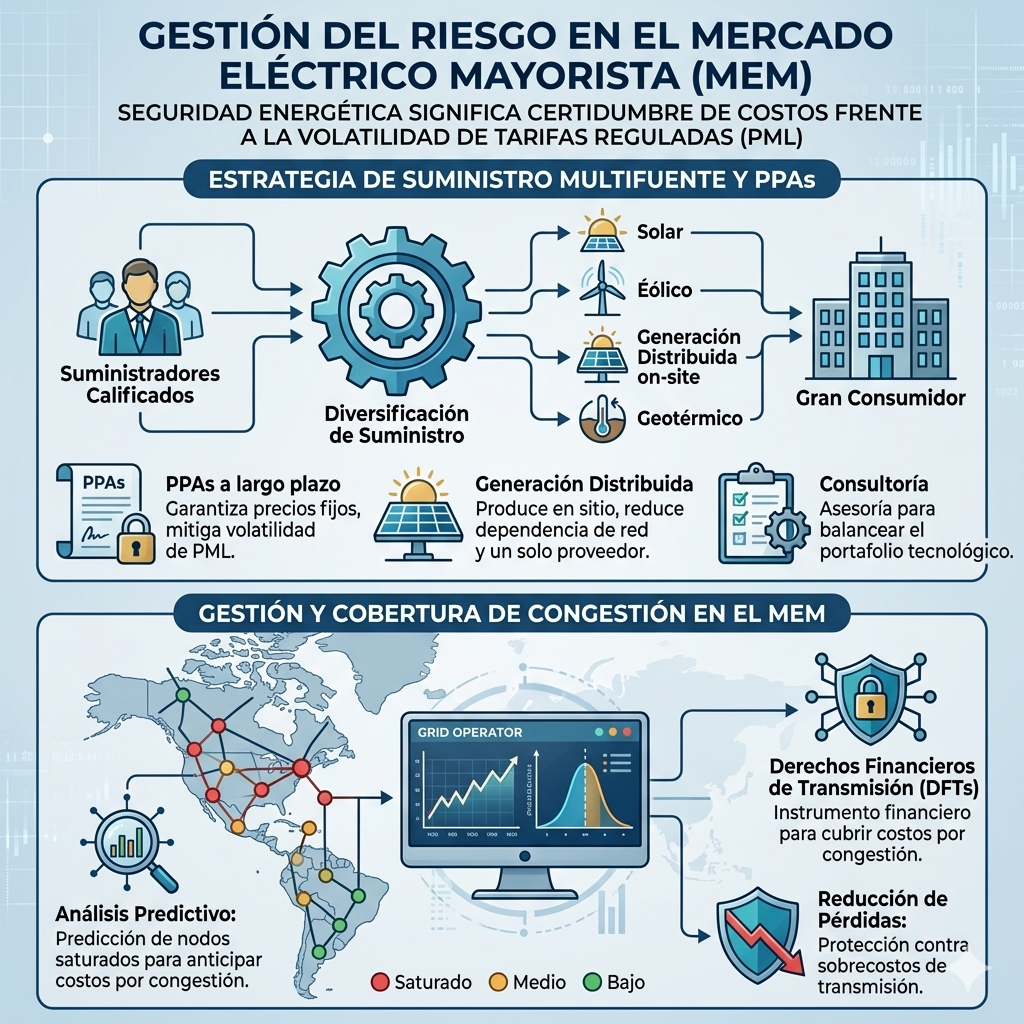
Financial Coverage and Diversification of the Energy Portfolio

Energy security also means cost certainty in the face of the volatility of regulated tariffs or local marginal prices (PML) of the MEM.

  • Multi-source Supply Strategy and PPAs: Consulting services to diversify energy supply through long-term power purchase agreements (PPAs) with Qualified Suppliers, combined with on-site distributed generation schemes to mitigate the risk of dependence on a single supplier or a single technology.
  • Congestion Management and Coverage in the MEM: Predictive analysis of saturated transmission nodes in the Wholesale Electricity Market to protect generators and large consumers from severe financial losses due to Transmission Financial Rights (DFTs) or high congestion costs.

Cybersecurity in Critical Infrastructure and Control Systems (OT)

As substations and industrial plants become digitized, digital security is becoming a pillar of energy security to prevent operational sabotage.
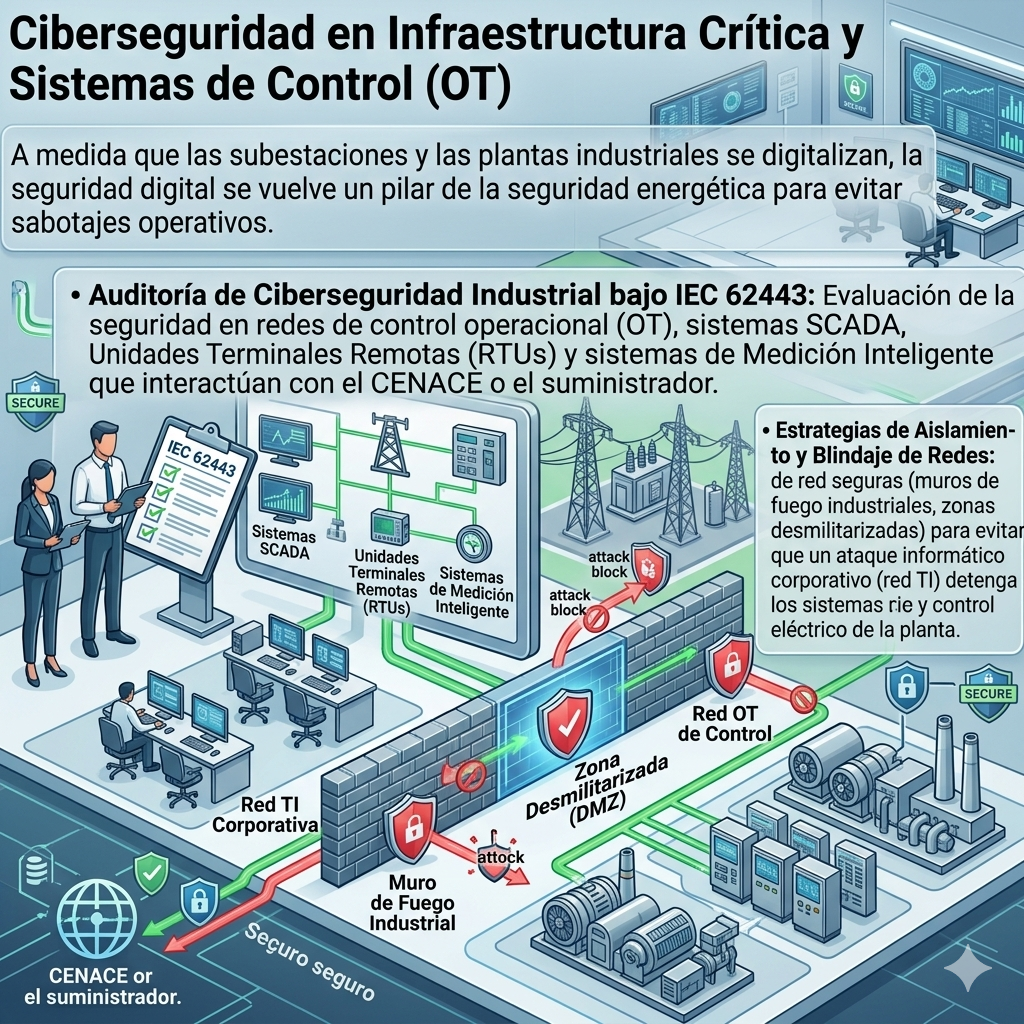
  • Industrial Cybersecurity Audit under IEC 62443: Evaluation of the safety of operational control (OT) networks, SCADA systems, Remote Terminal Units (RTUs) and smart metering systems that interact with CENACE or the supplier.
  • Network Isolation and Shielding Strategies: Design of secure network architectures (industrial firewalls, demilitarized zones) to prevent a corporate cyberattack (IT network) from stopping the plant's electrical power and control systems.

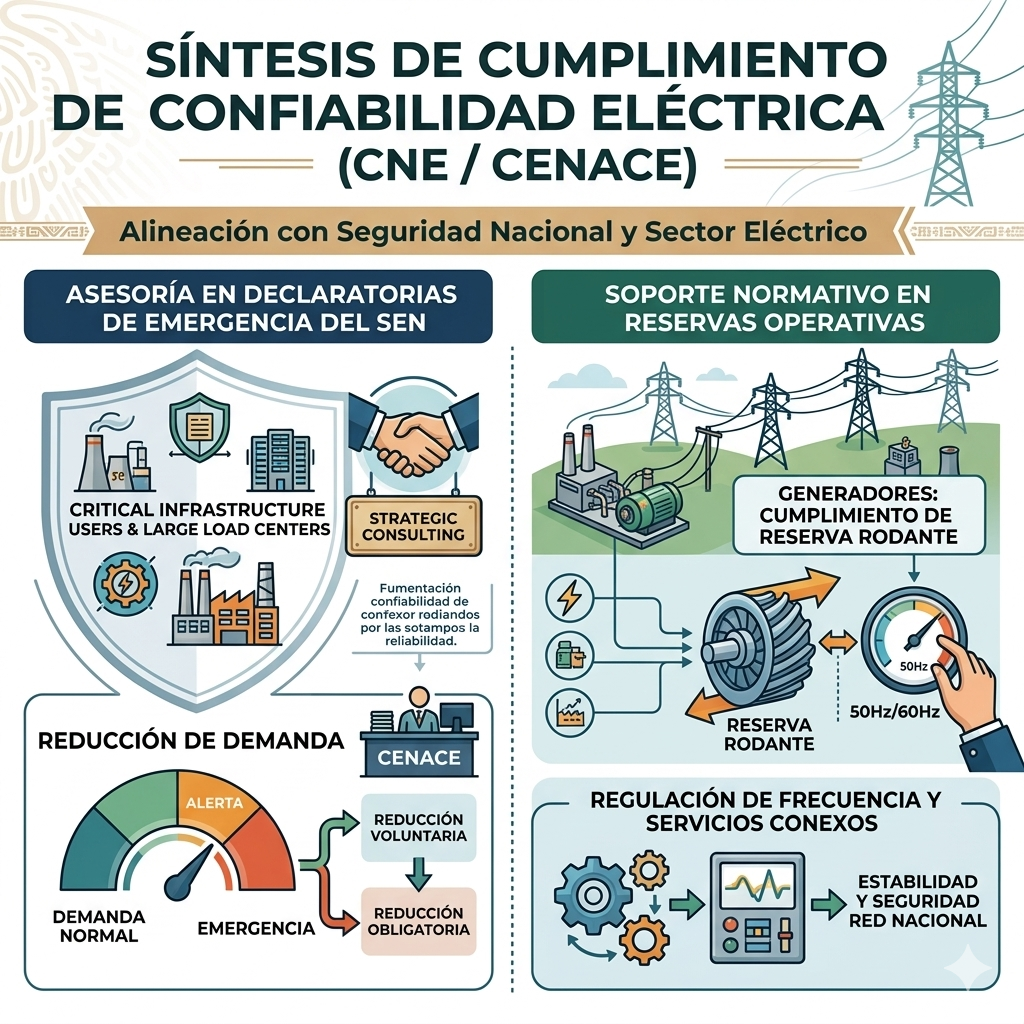
Compliance with the Reliability Guidelines of the CNE and CENACE

Mandatory alignment with the national security criteria dictated by the sector authorities.

  • Advice on Emergency Declarations for the National Emergency System: Strategic consulting for companies classified as “Critical Infrastructure Users” or Large Load Centers, defining the protocols for voluntary or mandatory demand reduction when CENACE issues Operational Alert or Emergency States.
  • Regulatory Support in Operational Reserves: For generators, consulting on compliance with spinning reserve requirements, frequency regulation and mandatory related services to contribute to the stability and security of the national grid.