Operational Technology Security
We advise on the protection of your industrial processes.
Integration of electrical engineering and advanced cybersecurity to protect your ICS/SCADA environments, ensure regulatory compliance, and eliminate unplanned downtime.
The following must be done:
Evaluation of OT Risks
Compliance IEC 62443
Threat Environment TO
Industrial networks and energy control systems (ICS/SCADA) are no longer isolated. The convergence of information technology (IT) and operational technology (OT) exposes electrical subsystems, PLCs, and HMIs to cyber threats designed to disrupt operational continuity.
The industry should not be treated with corporate or executive cybersecurity techniques.
The world of Information Technologies (IT) It is based on protecting, storing, and transforming information.
In the field of Operational Technologies (OT) They are based on controlling/operating industrial processes in real time and must be continuous.
What would the consequences be?
Strategic Pillars of Security in OT Services
Extremely important
Risk and Vulnerability Assessment
_____________
We map and analyze all of your industrial and electrical control assets to identify security gaps before they can be exploited.
ICS/SCADA Systems Protection
_____________
We design and implement resilient cybersecurity architectures engineered to operate under the real-time constraints of industrial environments.
OT Regulatory Compliance
_____________
We support your organization in structuring a cybersecurity framework aligned with international standards and regulatory requirements of the industrial and electrical sector.
Business Continuity
_____________
We minimize the financial impact of cyber incidents or catastrophic failures through resilience and accelerated recovery strategies.
Risk and Maturity OT
The analysis of Risk and Maturity OT It is the cornerstone for moving from reactive cybersecurity (putting out fires) to a proactive and business continuity-oriented stance.
Unlike traditional computing (IT), where data confidentiality is paramount, in environments of Electrical Engineering and Industrial Automation the absolute priority is the availability and physical security (Safety) of the processes.
Certifications that must be followed
- IEC 62443-2-4
- IEC 62443-3-3
- IEC 62443-4-1
- IEC 62443-4-2
- ISO/IEC 27001
- ISO/IEC 5230
The IEC 62443-2-4 standard is part of the IEC 62443 family of standards. It covers the security program requirements for Industrial Automation Control System (IACS) service providers. It defines a set of security capabilities and covers functional areas such as personnel, quality assurance, architecture, wireless connectivity, configuration management, remote access, event management, accounts, malware protection, patching, and backups.
The IEC 62443-3-3 standard is part of the IEC 62443 family of standards. It defines system security requirements and levels for network and system security. It covers requirements such as identification and authentication, authorization and usage control, system integrity, data confidentiality, restricted data flow, events, and availability.
IEC 62443-4-1 is part of the IEC 62443 family of standards. It covers the requirements for the secure product development lifecycle. It includes practices such as managing the security of the development process, specifying security requirements, security by design, secure implementation, verification and validation, managing security issues, updates, and guidelines.
The IEC 62443-4-2 standard is part of the IEC 62443 family of standards. It defines product security requirements and levels, focusing on software applications, embedded devices, host devices, and network devices. It covers requirements such as identification and authentication, authorization and usage control, system integrity, data confidentiality, restricted data flow, events, and availability.
ISO/IEC 27001 is an international standard for managing information security. It details the requirements for establishing, implementing, maintaining, and continually improving an information security management system (ISMS).
The ISO/IEC 5230 standard (also known as OpenChain Specification ISO/IEC is an international standard that defines the key requirements for a quality open source software (OSS) license compliance program. Published in December 2020 by ISO and IEC, it aims to build trust among organizations that share or exchange software.
He Multi-Level Protection Scheme (MLPS) It is China's national cybersecurity regulatory framework that classifies information systems into protection levels according to their importance to society, business operations, and national security.
For each level, MLPS 2.0 defines mandatory security requirements in terms of technology, management and operations, including system architecture, data protection, monitoring and incident response, etc.

Business continuity
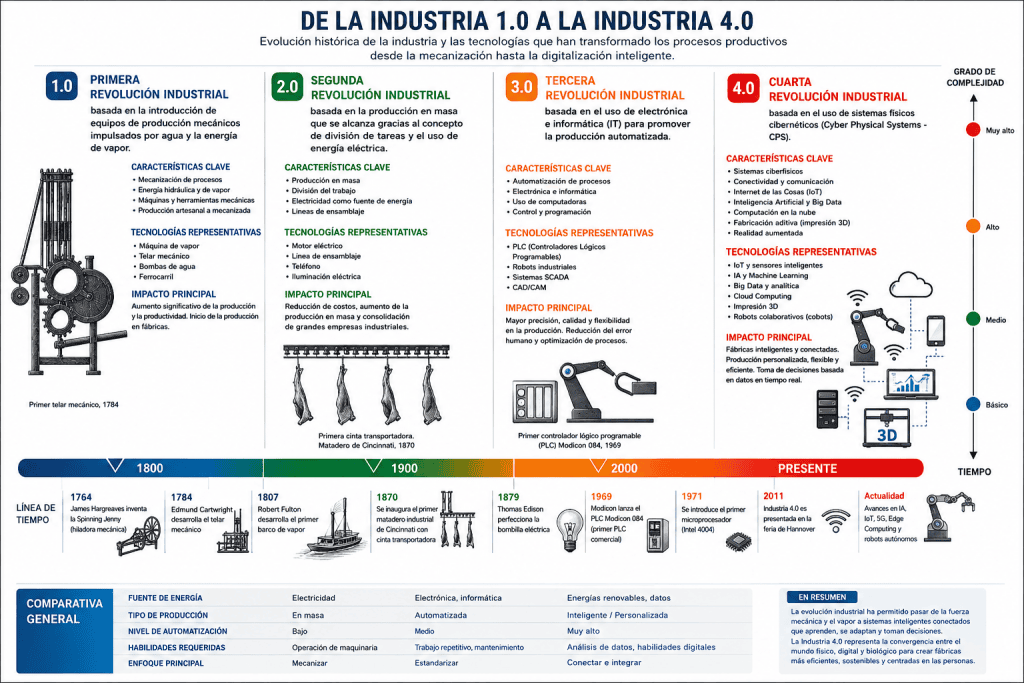
In the context of the Industry 4.0, Operational continuity increasingly depends on the availability, integrity, and resilience of connected industrial systems. The convergence of operational technologies (OT), information technologies (IT), automation, analytics, and connectivity increases process efficiency and visibility, but also amplifies exposure to cyber risks that can directly impact production and operational safety.
A bit of history
Business Continuity Plan (BCP)
He Business Continuity Plan (BCP) It establishes the framework for maintaining and recovering critical processes in the event of incidents that could affect industrial operations. In an environment of Industry 4.0, The BCP must consider not only physical infrastructure and human resources, but also dependence on TO/IT systems, industrial networks, automation platforms, digital services, and third-party technology providers.
From the perspective of IEC 62443, Business continuity planning (BCP) must incorporate industrial cybersecurity as a component of business continuity. This involves considering segmentation by zones and pipelines, access control, secure backups, configuration recovery, critical system availability, and incident response procedures involving PLCs, SCADA systems, DCS, HMIs, historians, engineering systems, and other components of the OT environment.