
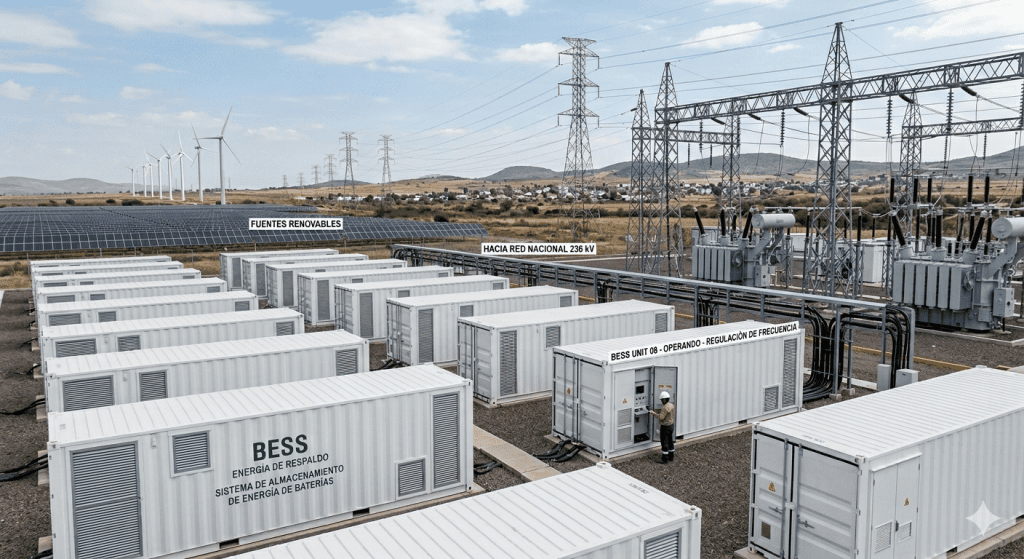
Battery Energy Storage Systems (BESS)
What are BESS?
The BESS (Battery Energy Storage SystemsThese are technological systems that capture electrical energy from the grid or from generation sources (such as solar or wind) and store it in electrochemical batteries (mainly lithium-ion) to release it later when the system needs it most. They are not just "giant batteries," but complex systems integrated by storage cells, bidirectional inverters, and intelligent energy management systems (BMS/EMS).
What are they used for in the National Electric System?
In the context of the National Electric System (SEN), BESSs act as an operational “Swiss Army knife”, solving the main challenges of the modern grid through the following key functions:
Renewable Energy Intermittency Mitigation: They stabilize the grid by storing surplus energy when the sun or wind is abundant, and injecting it instantly when these resources decrease, preventing blackouts or voltage fluctuations.
Frequency and Voltage Regulation (Ancillary Services): They respond in milliseconds to frequency drops or voltage variations in the grid, acting much faster and cleaner than conventional generation plants.
Load Displacement (Peak Shaving y Arbitration): They absorb energy during off-peak hours (when generation costs are low) and inject it during peak demand hours (when the grid is saturated and energy is more expensive), relieving stress on the system.
Deferral of Transmission Investments: By being strategically placed at saturated nodes in the network, they allow costly infrastructure works on transmission lines and substations to be postponed or avoided.
Contingency Support (Black Start): They have the ability to start up autonomously and provide immediate backup power in the event of massive failures or blackouts in the electrical grid.
Conclusion
For the National Electric System, BESSs are not a luxury, but a critical and enabling infrastructure. They are the indispensable bridge to guarantee the security, flexibility and reliability of the electricity supply, allowing a clean energy transition without compromising the stability of the grid.