Renewable Energy

Under the current energy policy, the integration of renewables requires strategic alignment with state objectives, the reliability of the CENACE national grid, and a strong social commitment.

Regulatory Feasibility and Binding Planning

Under the new rules, no project can move forward unless it is aligned with the State's planning.
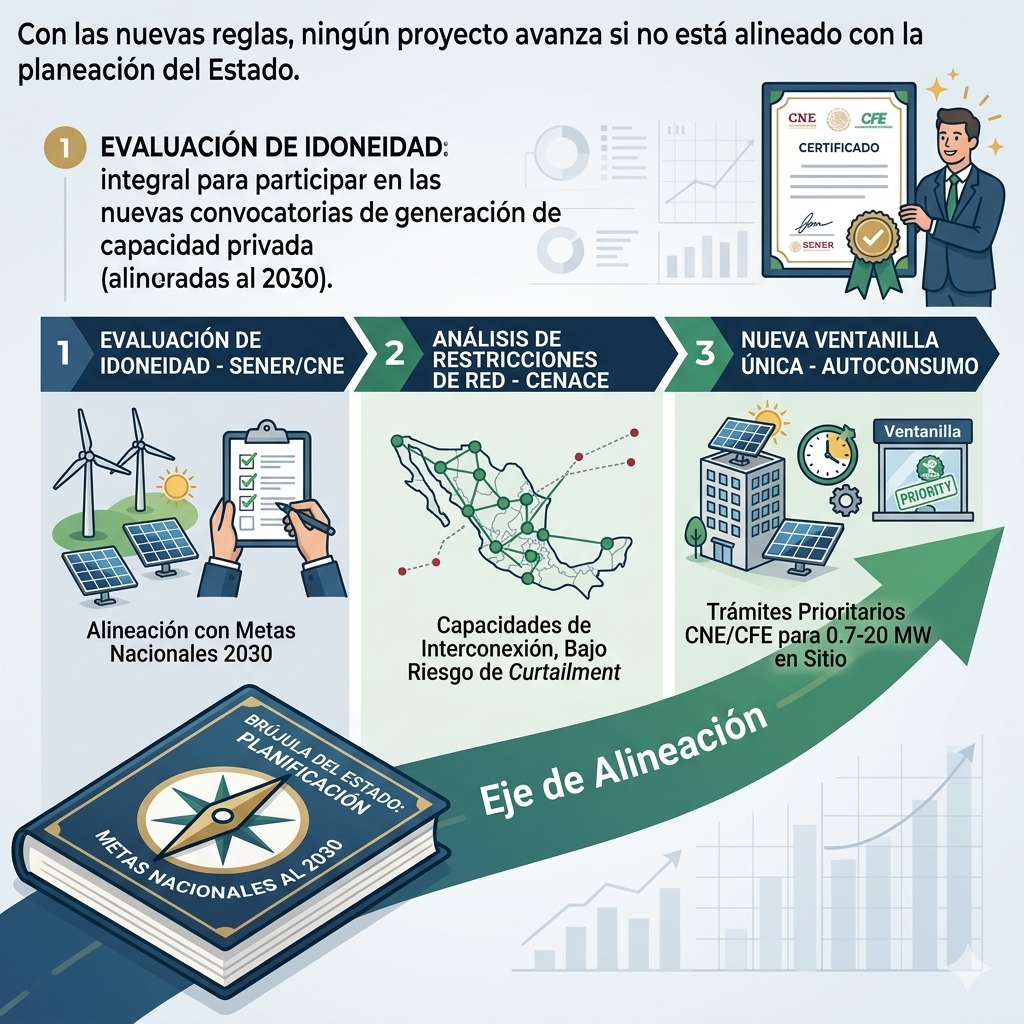
  • Suitability Assessment in SENER/CNE Calls for Proposals: Comprehensive advice to participate in the new calls for renewable energy generation launched by the government for the incorporation of private capacity (aligned with the national goals to 2030).
  • Network and Injection Constraint Analysis: Preliminary studies based on the maximum interconnection capacities published by CENACE to identify nodes with absorption capacity and low risk of congestion or “curtailment” (generation cuts).
  • Management under the New Single Window for Self-Consumption: Advice and priority and simultaneous processing for on-site industrial projects (from 0.7 MW to 20 MW) under the guidelines of the single window, optimizing the times of obtaining permits before the CNE and CFE.

Project Development (Engineering and Technical Studies)

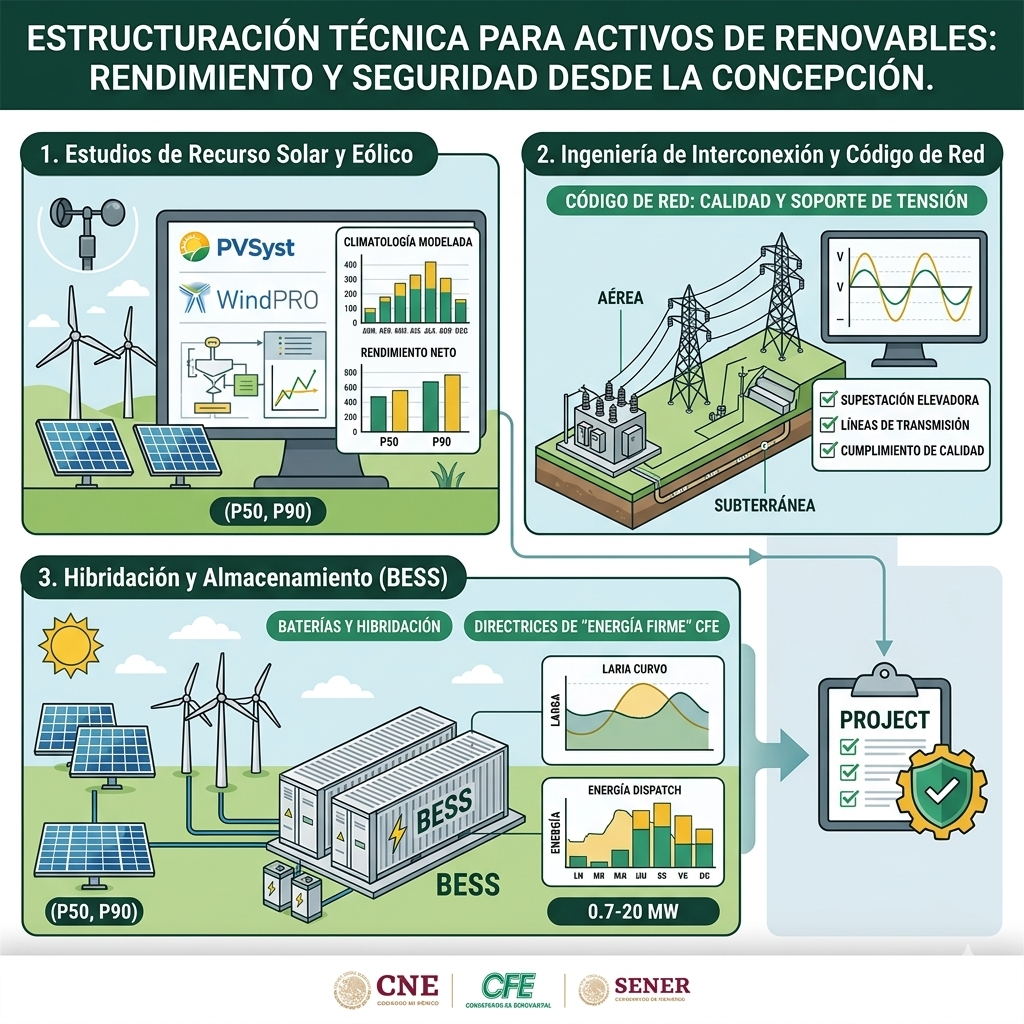
Technical structuring that guarantees the performance and safety of the asset from its conception.

  • Solar and Wind Resource Studies: Climatological modeling, on-site measurement campaigns and advanced energy simulations (using software such as PVSyst or WindPRO) to determine the net performance of the project (P50, P90).
  • Interconnection Engineering and Grid Code for Renewables: Design of step-up substations and overhead/underground transmission lines strictly complying with the power quality and voltage support criteria required for power plants by the current Grid Code.
  • Hybridization and Storage (BESS): Technical and economic sizing of battery systems coupled to solar or wind power plants to comply with the "firm energy" guidelines with storage requested by the CFE in the new contracts.

Social, Environmental and Energy Justice Consulting

The social component is currently the most rigorous filter for the authorization of any renewable energy plant.
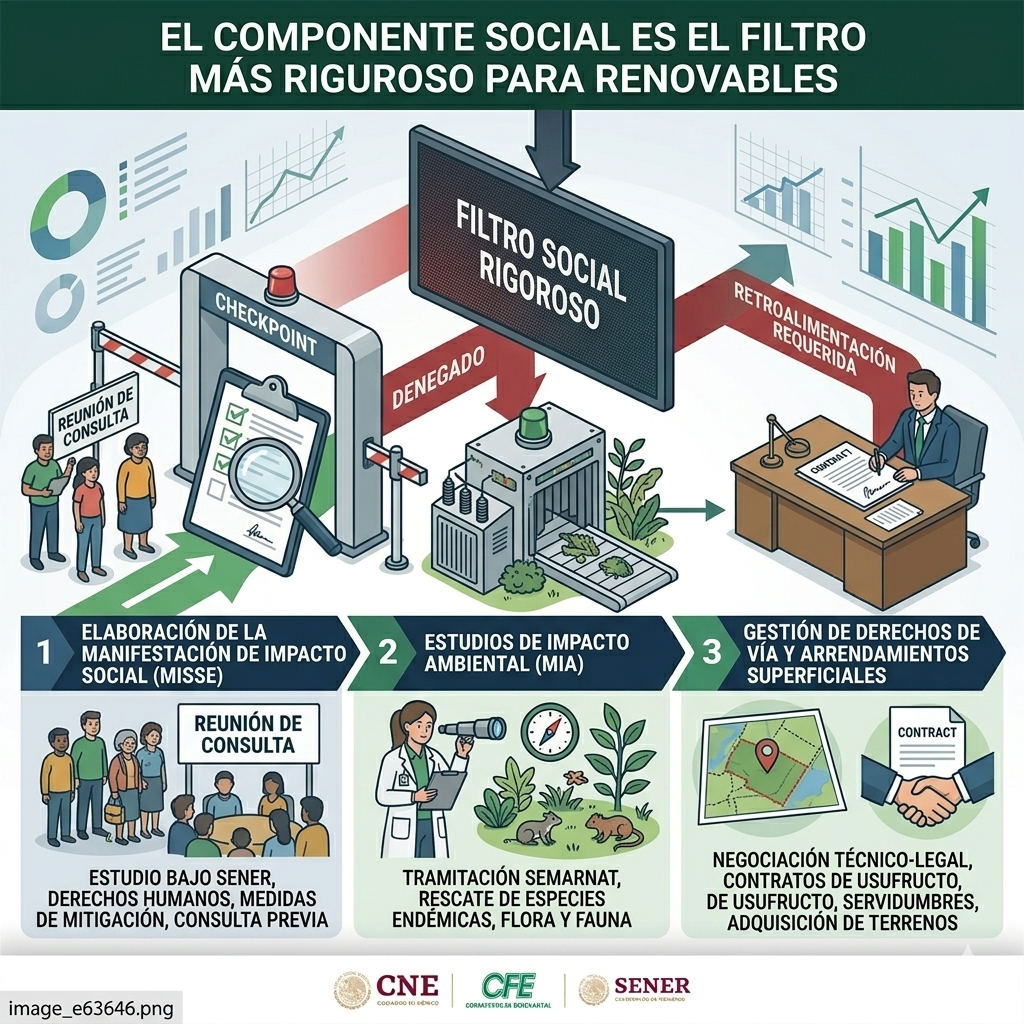
  • Preparation of the Social Impact Statement (MISSE): Development of the social study under the latest provisions of the SENER, with a strict focus on mitigation measures, human rights and methodological design of the prior consultation in communities.
  • Environmental Impact Assessments (EIA) and Land Use Change: Processing and development of Environmental Impact Statements before SEMARNAT, including studies of flora, fauna and rescue of endemic species.
  • Right-of-Way Management and Surface Leases: Technical and legal negotiation of usufruct contracts, easements and acquisition of land suitable for large-scale projects.

Marketing, PPAs and Market Strategy

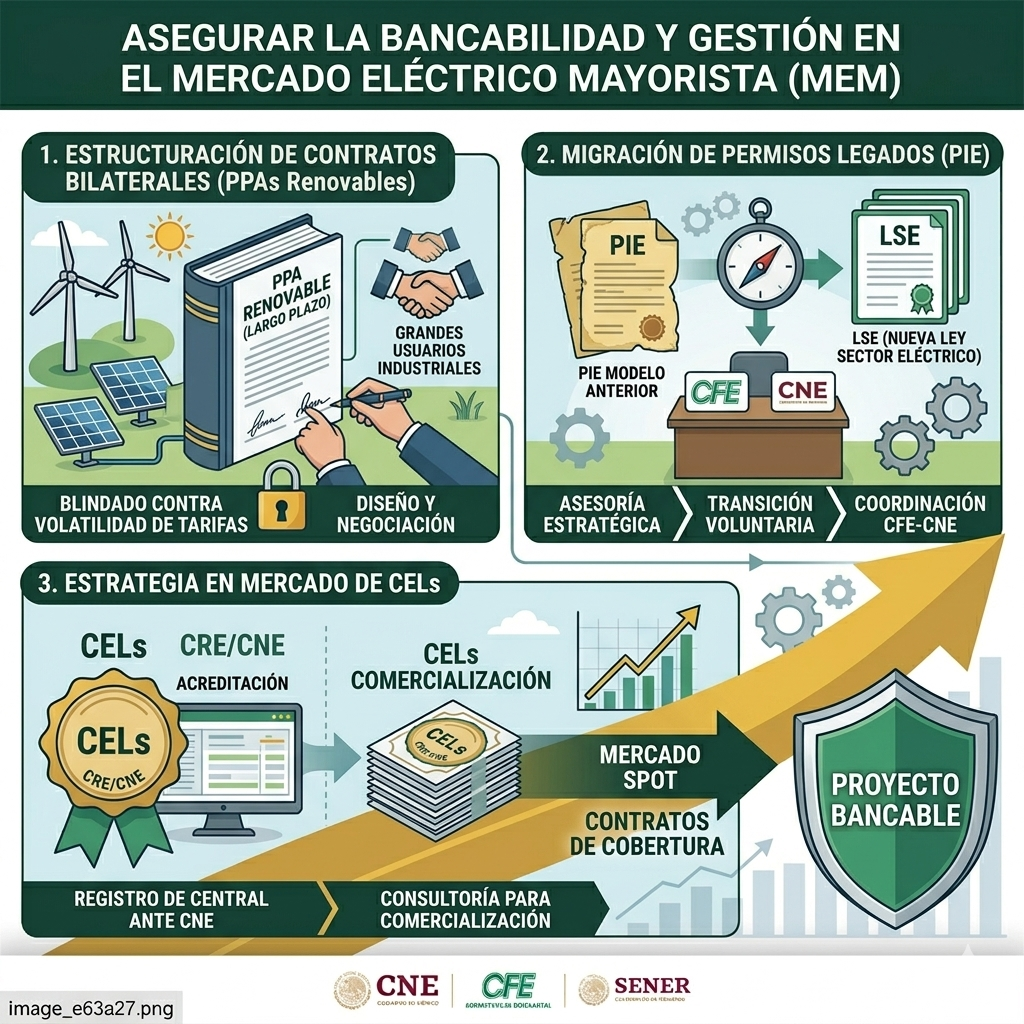
Ensure the bankability of the project through solid contracts and efficient management of the Wholesale Electricity Market (MEM).

  • Structuring Bilateral Contracts (Renewable PPAs): Design and negotiation of long-term power purchase agreements between private generators and Large Industrial Users (Qualified Load Centers), protecting tariffs against volatility.
  • Legacy Permission Migration (PIE): Strategic advice for clean generation plants seeking to comply with the voluntary migration guidelines to transition from the previous model to the Electricity Sector Law (LSE) in coordination with CFE and CNE.
  • Strategy in the Clean Energy Certificates (CELs) Market: Registration of the central office with the CNE for the accreditation of CELs and consulting for their subsequent commercialization in the spot market or through contracts for coverage of associated products.

Operation and Management of Renewable Assets (Asset Management)

Maximizing the asset's useful life cycle and efficiency in daily dispatch to CENACE.
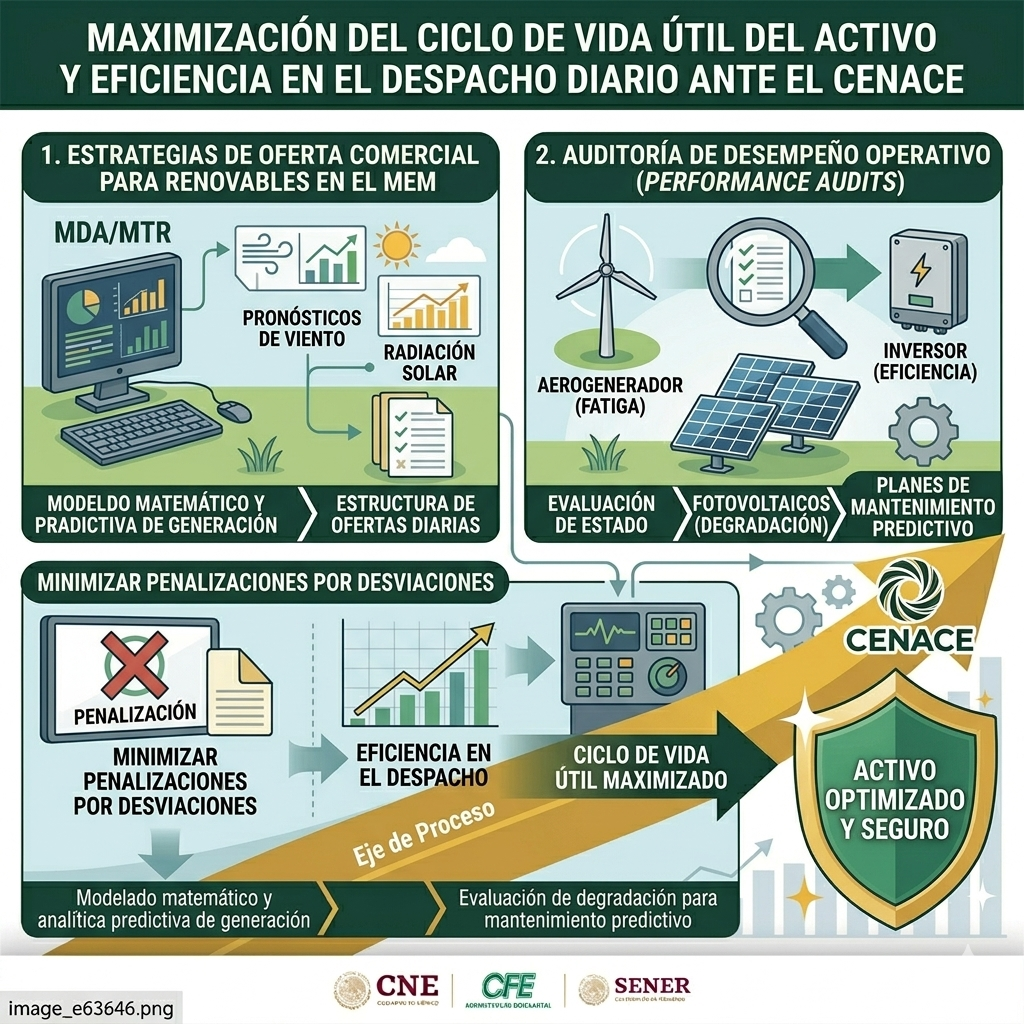
  • Commercial Offering Strategies for Renewables in the MEM: Mathematical modeling and predictive analytics of generation (wind/radiation forecasts) to structure daily offers in the Anticipation Day Market (ADM), minimizing penalties for deviations in the Real Time Market (RTM).
  • Operational Performance Audits: Evaluation of photovoltaic module degradation, inverter efficiency, or wind turbine fatigue to implement predictive maintenance plans.