Network Code

For Load Centers (industrial and commercial users in Medium and High Voltage) and Supply/Generation Plants, compliance is not optional and requires a structured approach.

Diagnostic Phase and Engineering Studies (Technical Compliance)

This is the fundamental analytical stage to assess the current state of the facility and detect compliance gaps.
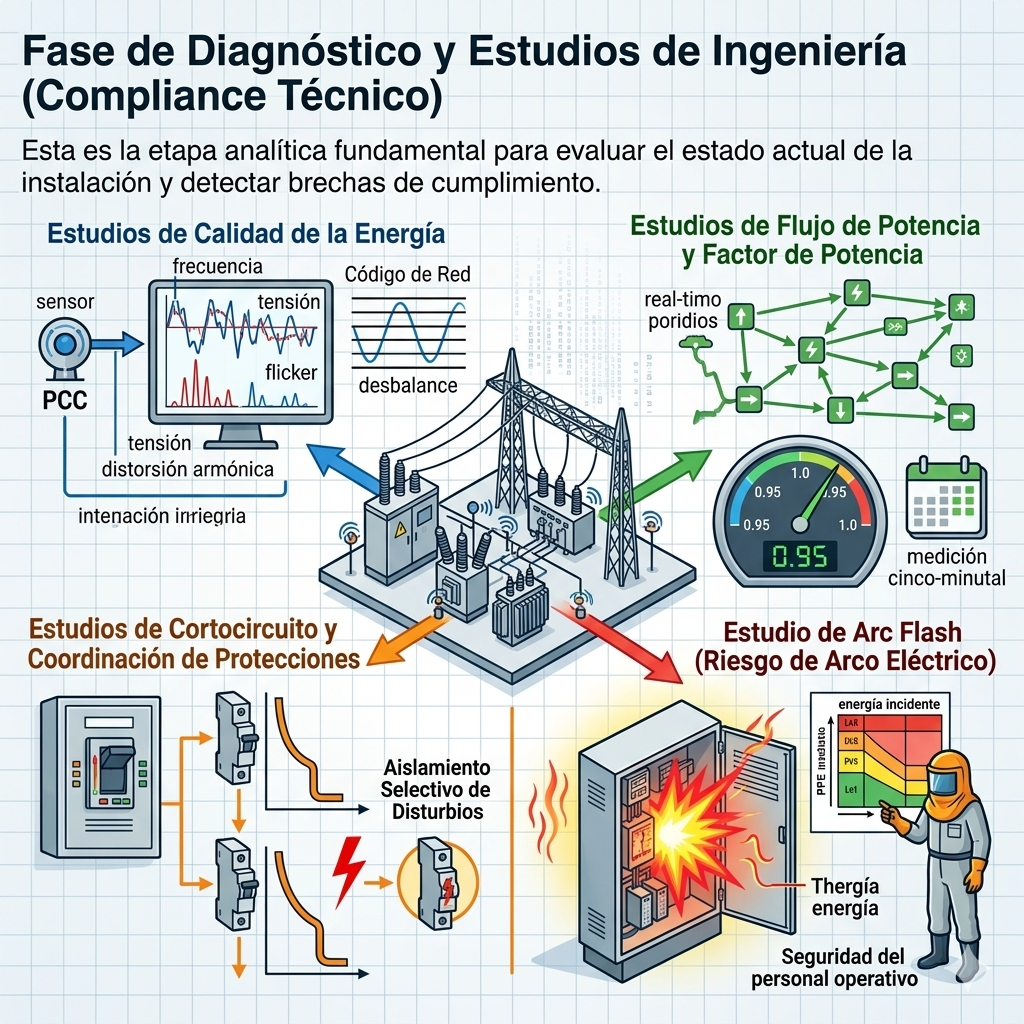
  • Power Quality Studies: Point of Connection (PCC) measurement in accordance with the requirements of the Grid Code (frequency, voltage, harmonic distortion, voltage fluctuation/flicker and current imbalance).
  • Power Flow and Power Factor Studies: Simulation of system behavior to design solutions that guarantee a power factor between 0.95 and 1.0 with five-minute measurement.
  • Short Circuit Studies and Protection Coordination: Evaluation of the equipment's ability to withstand faults and adjustment of relays to ensure selective isolation of disturbances.
  • Arc Flash Study (Arc Flash Risk): Determination of incident energy for the safety of operating personnel, implicitly required in the management of electrical infrastructure.

Solutions and Mitigation Engineering

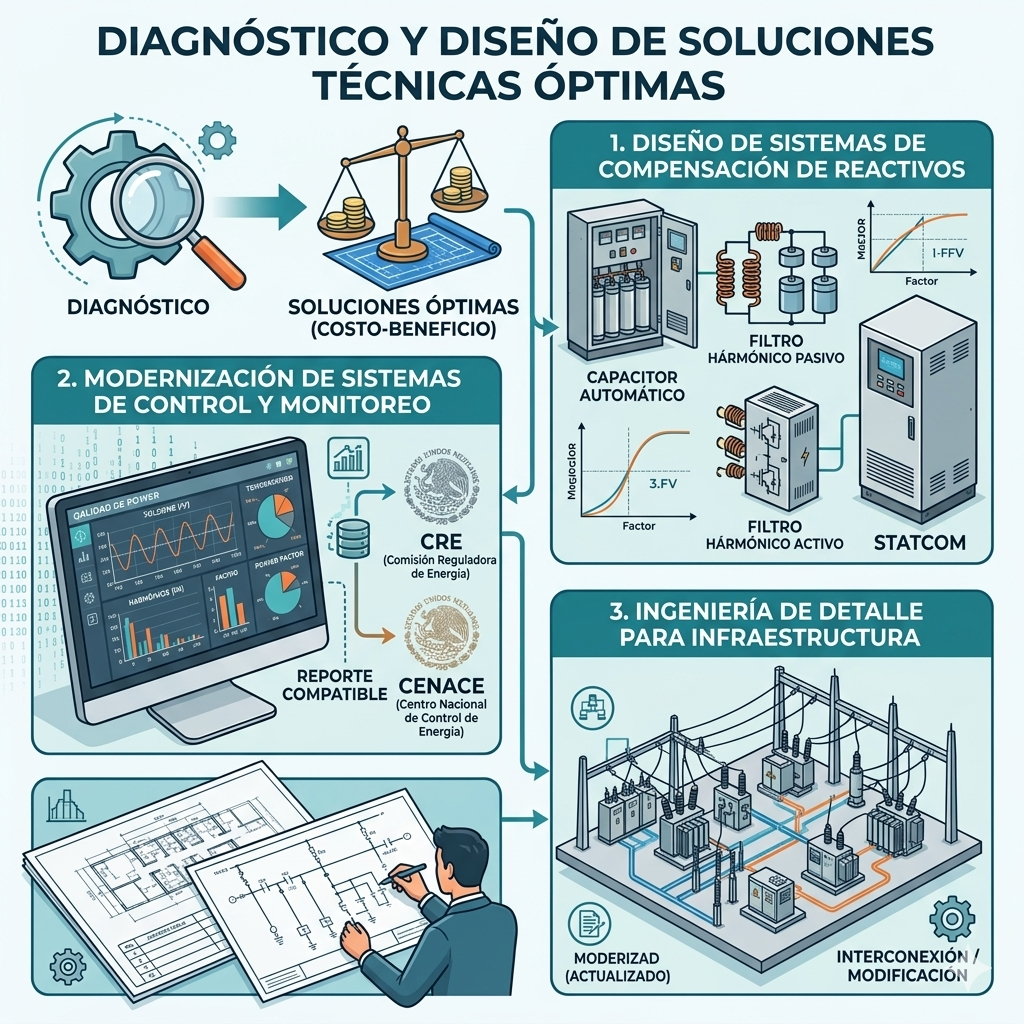
If the diagnosis reveals non-compliance, the optimal technical solutions are designed based on cost-benefit criteria.

  • Design of Reactive Power Compensation Systems: Technical specification of automatic capacitor banks, harmonic filters (active or passive) or STATCOM systems for voltage and power factor control.
  • Modernization of Control and Monitoring Systems: Design and integration of continuous power quality monitoring systems with reporting compatible with the requirements of the CRE and CENACE.
  • Detailed Engineering for Infrastructure: Plans, updated single-line diagrams and specifications for the interconnection or modification of substations.

Regulatory Management and Procedures before the CRE and CENACE

Technical compliance must be formalized legally and administratively.
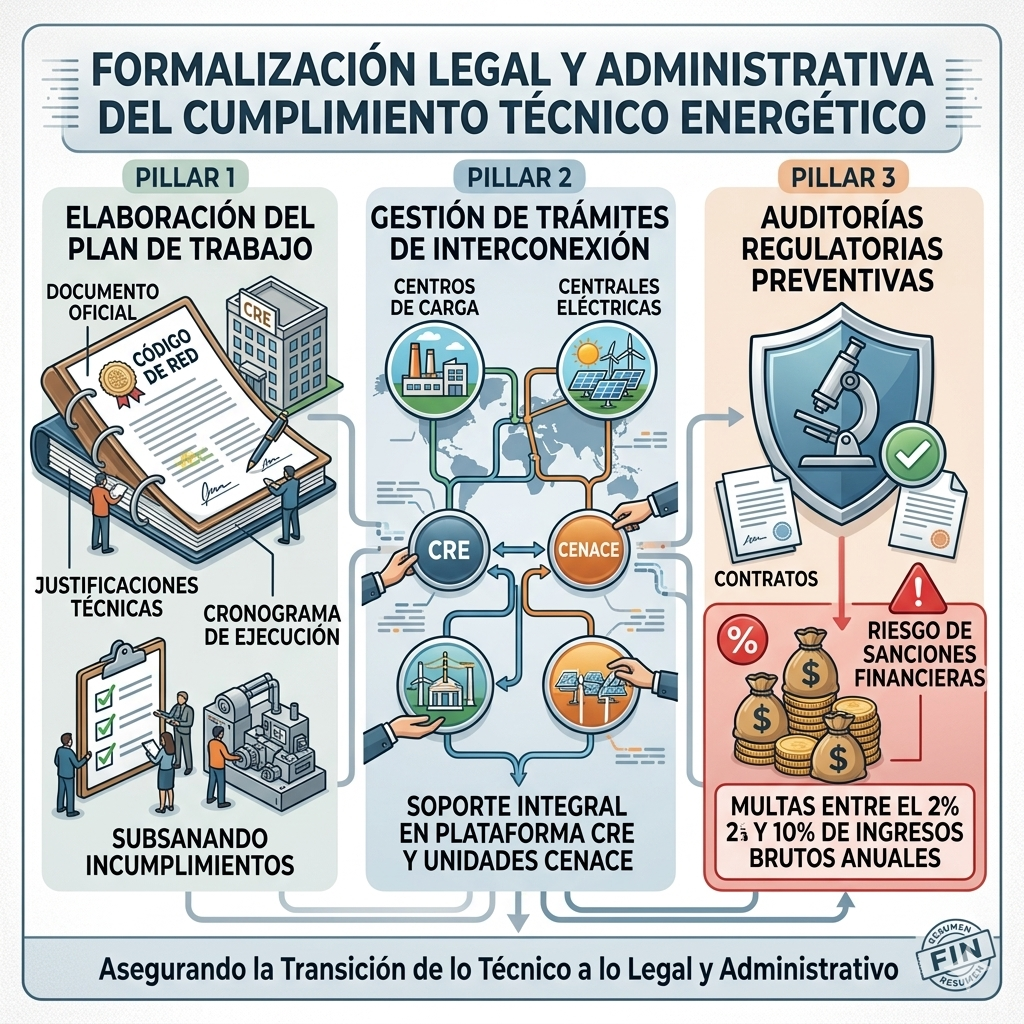
  • Development of the Network Code Work Plan: Structuring the official document submitted to the CRE, detailing the actions, technical justifications and the execution schedule to remedy the non-compliance.
  • Interconnection/Connection Procedure Management: Comprehensive support for new load centers or power plants in the processes of the CRE platform and the CENACE units.
  • Preventive Regulatory Audits: Review of legal status, supply contracts and connection agreements to identify risks of financial penalties (which can range from 2% to 10% of the previous year's gross income).

Quality Assurance and Verification

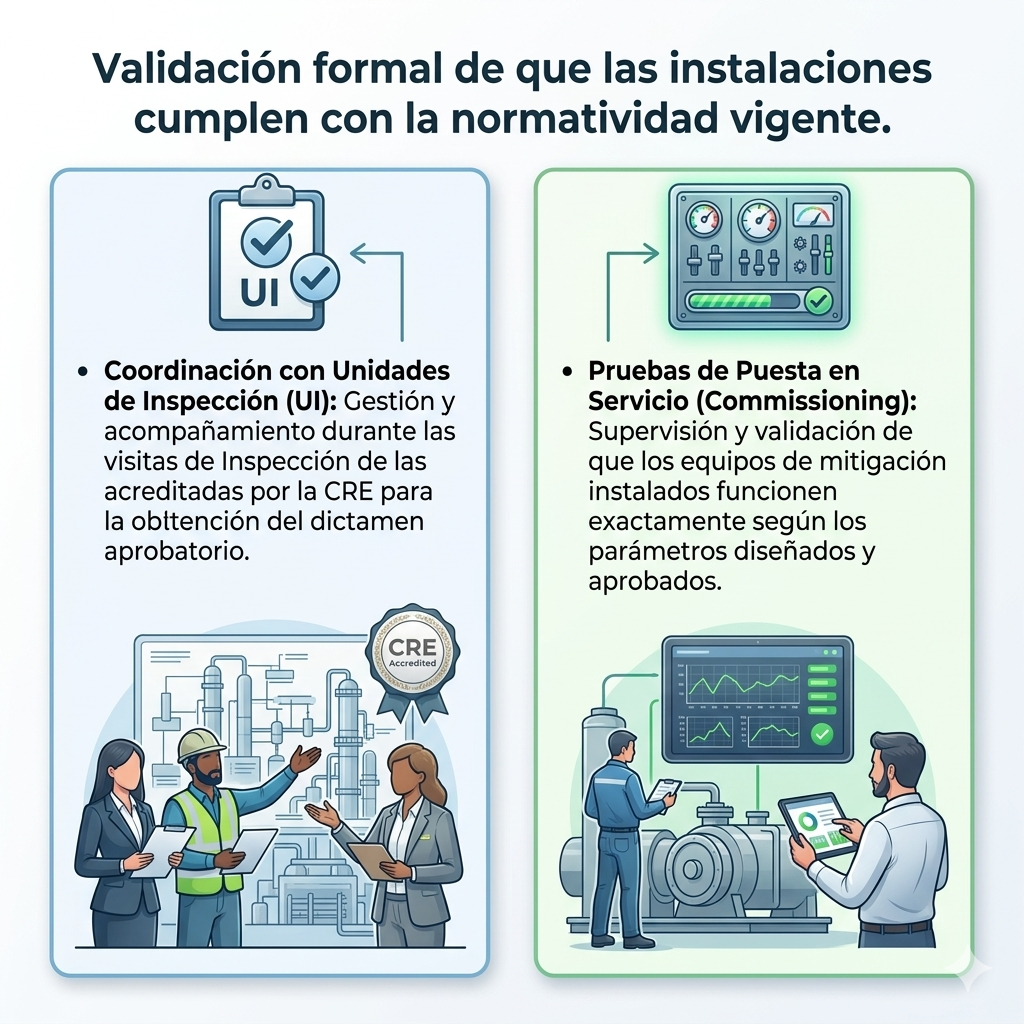
Formal validation that the facilities comply with current regulations.

  • Coordination with Inspection Units (UI): Management and support during inspection visits of the CRE-accredited Units to obtain the approval opinion.
  • Commissioning Tests: Monitoring and validation that the installed mitigation equipment functions exactly according to the designed and approved parameters.

Strategic Consulting and Energy Asset Management

Value-added services for managers and operations committees.
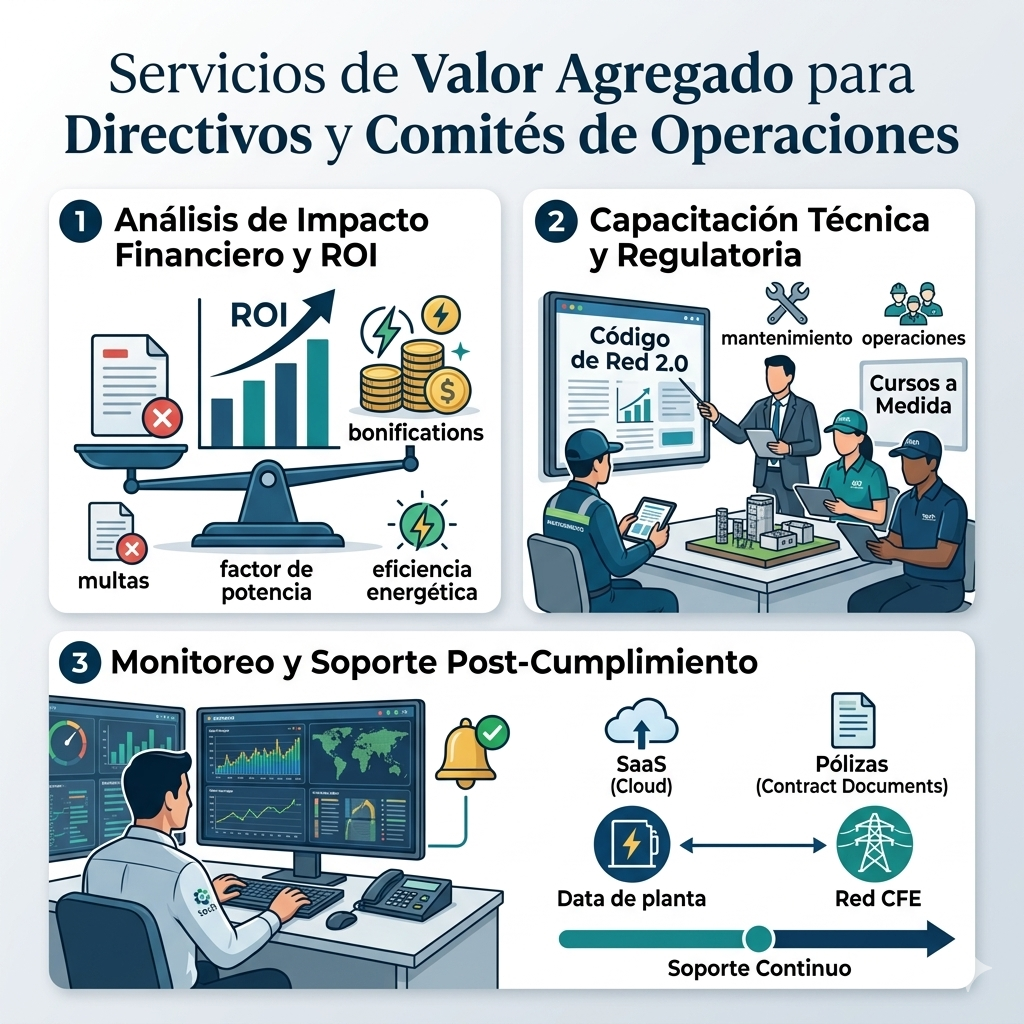
  • Financial Impact Analysis and Return on Investment (ROI): Economic evaluation of Grid Code projects, considering the mitigation of fines, bonuses for power factor and energy efficiency.
  • Technical and Regulatory Training: Tailor-made courses and workshops for maintenance and operations personnel on the operational implications of Grid Code 2.0 (or current versions).
  • Post-Compliance Monitoring and Support: Ongoing consulting services (SaaS or support policies) to analyze electrical system alerts and prevent future deviations due to changes in the operation of the CFE plant or network.