
Energy efficiency is no longer just a sustainability or public relations initiative; it is an indispensable financial and regulatory tool to reduce peak demand, mitigate grid code penalties, and maximize the return on every megawatt-hour (MWh) consumed.
Energy Audits and Comprehensive Diagnostics
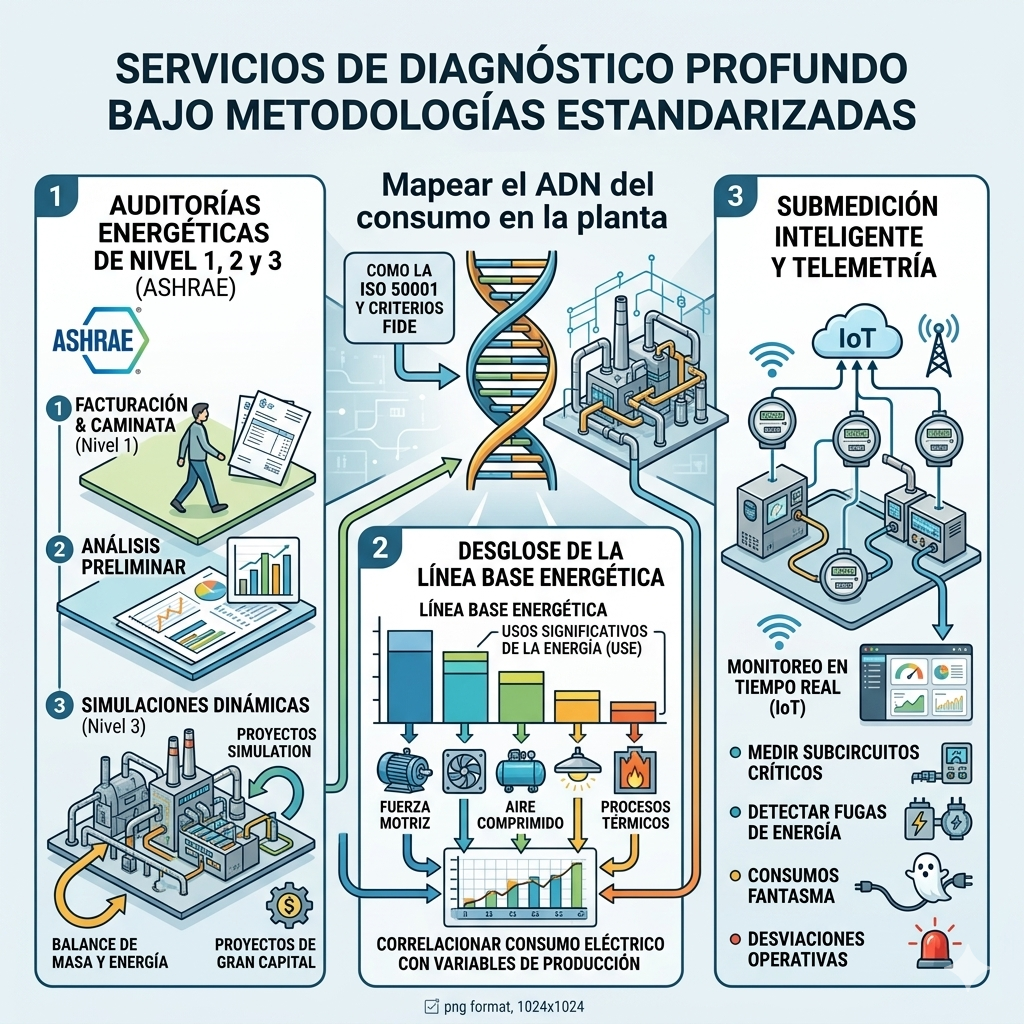
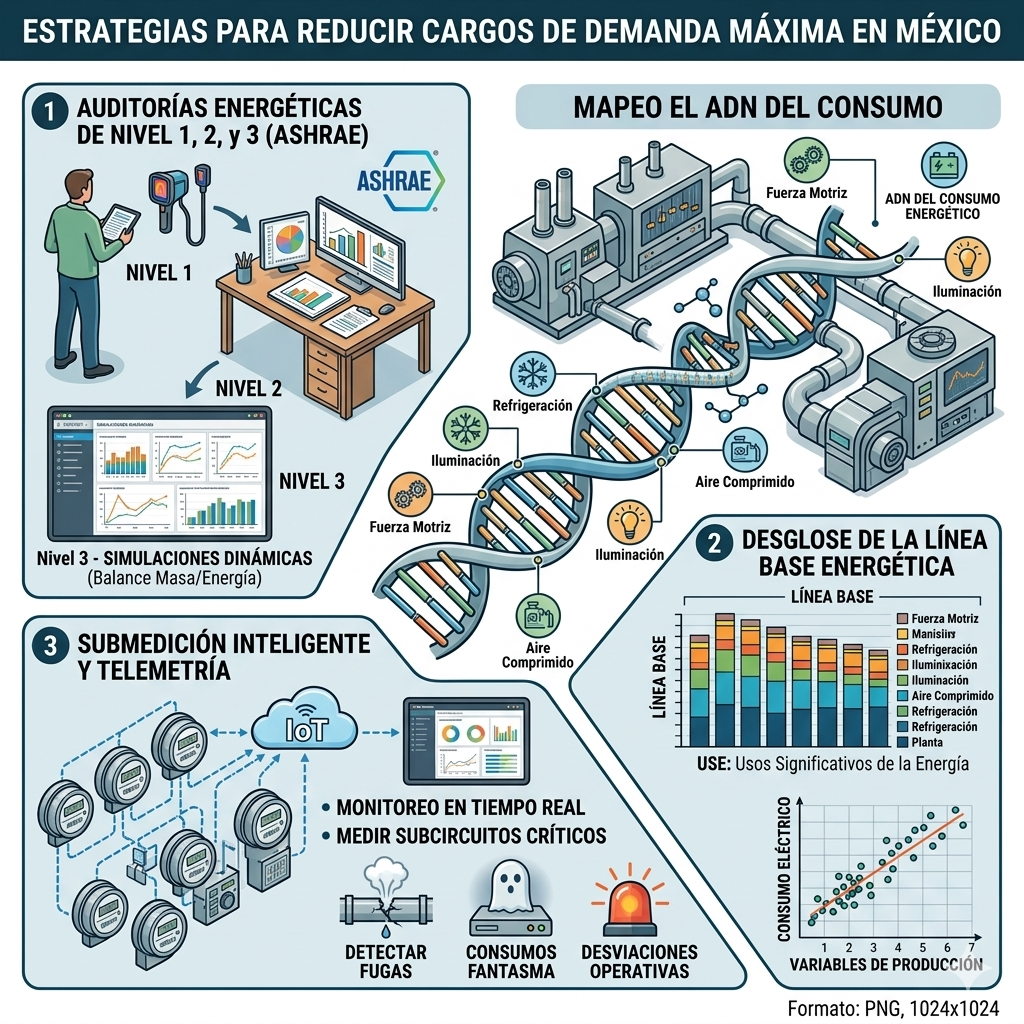
In-depth diagnostic services using standardized methodologies (such as ISO 50001 or the FIDE criteria) to map the DNA of consumption in the plant.
- Level 1, 2 and 3 Energy Audits (ASHRAE): From a preliminary billing analysis and "walk-through" of the facilities (Level 1), to dynamic energy simulations with mass and energy balance (Level 3) for large capital projects.
- Energy Baseline Breakdown: Identification of Significant Energy Uses (SEU) in the plant (motive power, cooling, compressed air, lighting, thermal processes) to correlate electricity consumption with production variables.
- Intelligent Submetering and Telemetry: Design and implementation of real-time monitoring systems (IoT) to measure critical subcircuits, allowing the detection of energy leaks, phantom consumption, and operational deviations instantly.
Optimization of Thermal and Motive Power Systems
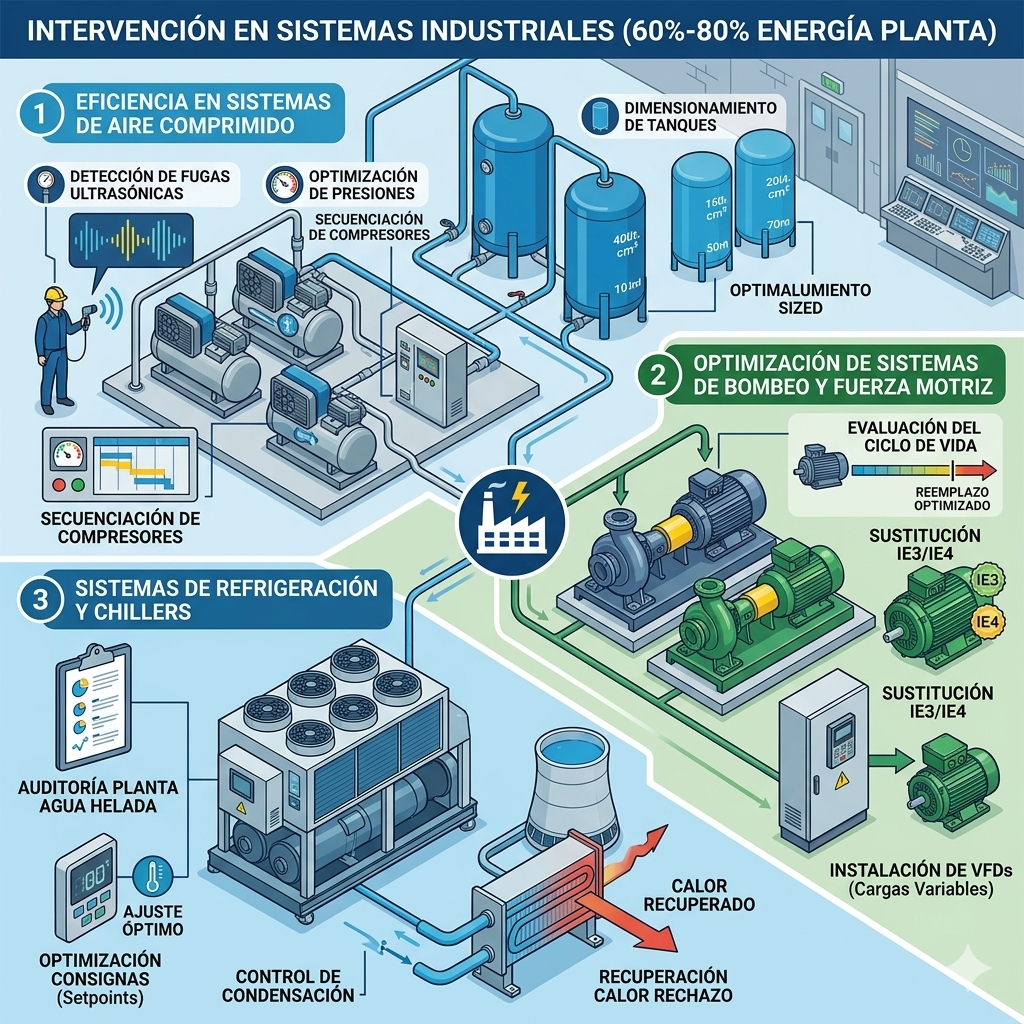
Intervention in industrial systems that typically consume between 60% and 80% of a plant's electrical and thermal energy.
- Efficiency in Compressed Air Systems: Ultrasonic leak detection studies, optimization of operating pressures, compressor sequencing and sizing of storage tanks.
- Optimization of Pumping and Power Systems: Life cycle assessment of electric motors, replacement with high-efficiency motors (IE3/IE4) and feasibility analysis for the installation of Variable Frequency Drives (VFDs) on variable loads.
- Cooling Systems and Chillers: Auditing of chilled water plants, optimization of temperature setpoints, condensation control and recovery of rejected heat.
Demand Management and Consumption Profile Optimization
Operational strategies to reduce the most aggressive charges on electricity bills in Mexico: the Peak Demand.
- Peak Shaving Strategies (Peak Shaving): Programming and reconfiguration of industrial processes to prevent machinery start-ups from coinciding with the most expensive hours of the day (GDMTH/DIST peak period).
- Integrating Storage with BESS for Efficiency: Technical-economic analysis for using battery systems that charge during Base (economic) tariff periods and discharge during Peak periods, drastically reducing the billable demand to CFE.
- Power Factor Optimization: Design of advanced reactive compensation systems to maintain the power factor as close to 1.0 as possible, eliminating penalties on the CFE bill and freeing up apparent capacity in the plant's transformers.
Energy Management Systems (EnMS) and Certifications
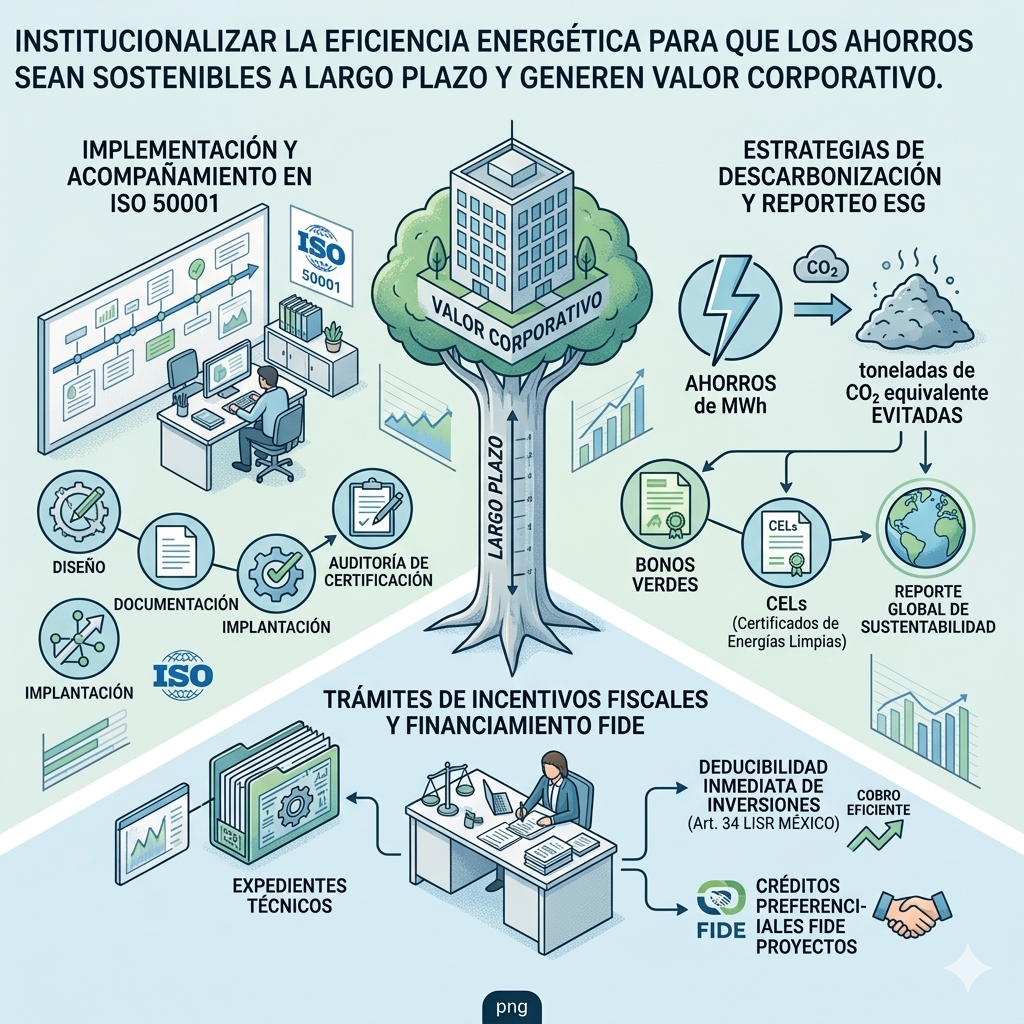
Institutionalize energy efficiency so that savings are sustainable in the long term and generate corporate value.
- Implementation and Support in ISO 50001: Comprehensive consulting for the design, documentation and implementation of a formal Energy Management System, preparing the organization for the international certification audit.
- Decarbonization Strategies and ESG Reporting: Conversion of MWh savings to equivalent tons of CO2 avoided, aligning energy efficiency efforts with green bonds, Clean Energy Certificates (CELs) and the company's global sustainability reports.
- Procedures for Tax Incentives and FIDE Financing: Management of technical files to access immediate deductibility of investments in efficient assets (Article 34 of the LISR in Mexico) and obtaining preferential credits for energy saving projects.
Efficient Self-Supply Project Engineering (On-Site)
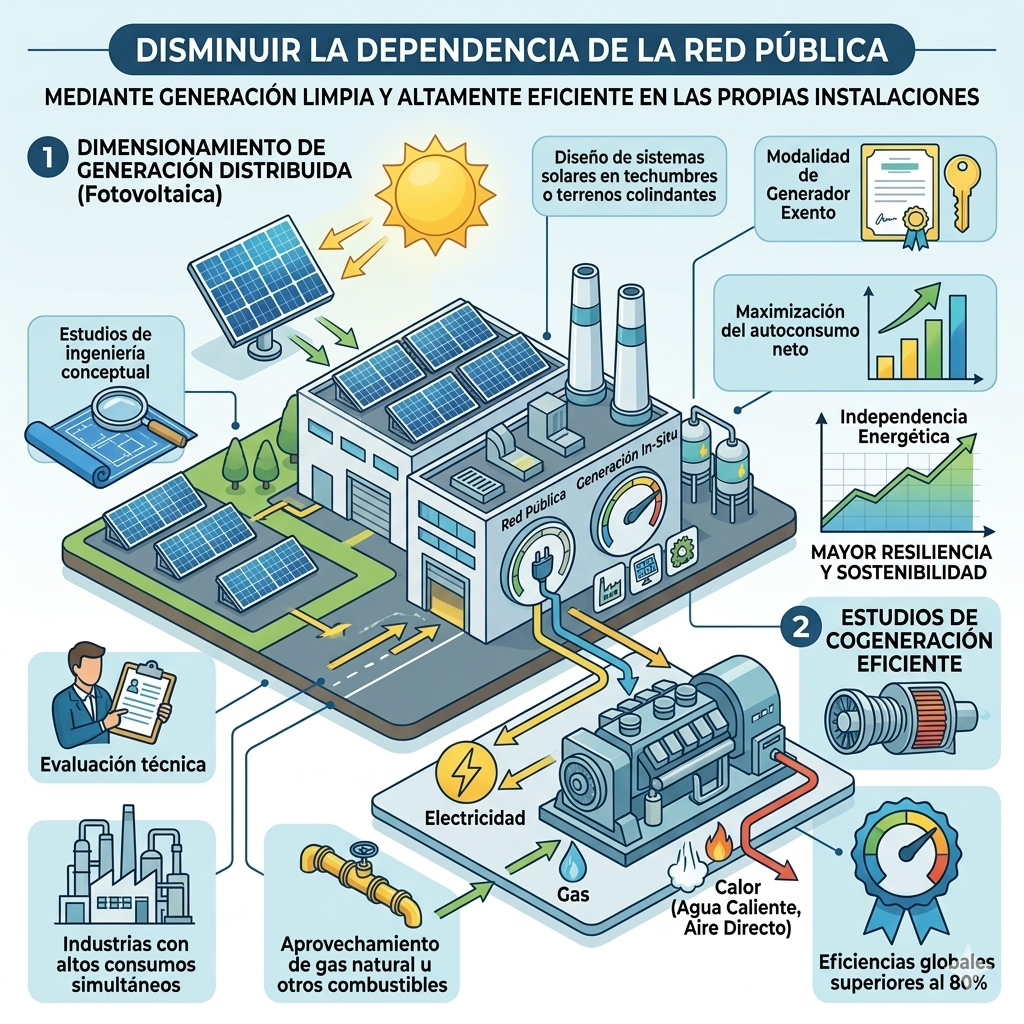
Reduce dependence on the public grid through clean and highly efficient generation schemes on the premises.
- Distributed Generation (Photovoltaic) Sizing: Conceptual engineering studies for the design of solar systems on rooftops or adjacent land under the Exempt Generator modality, maximizing the net self-consumption of the plant.
- Efficient Cogeneration Studies: Technical evaluation for industries with high simultaneous consumption of electricity and heat (steam, hot water, direct air), using natural gas or other fuels to generate both vectors with overall efficiencies greater than 80%.